
———————-
“You will never be happy if you continue to search for what happiness consists of. You will never live if you are looking for the meaning of life.”
Albert Camus
—————-
“Happiness is defined by the unhappiness that follows it”
Dan Harmon
————————–
Back in 2013ish I wrote Manufacturing happiness. In it I stated this:
the biggest issue in employee engagement discussion.
 As soon as someone speaks out about employee engagement, or disengagement, or ‘building a dynamic organization’ or even ‘motivating employees’ they inevitably suggest one big ship making progress in some direction. They are wrong.
While direction may be consistent the speed in which individuals, teams, departments is different. Some may be engaged and be as slow as snails and some may be engaged and faster than Usain Bolt.
The disengaged are still moving and, on occasion, can be compelled to move a little faster. And, on occasion, these same people and groups may seem to be disengaged … and yet they may only be recuperating <and, boy oh boy, a shitload of managers misread that scenario>.
All this unevenness, combined with the fact that everyone knows a happy employee base is a more productive employee base, means the business world has become quite creative <often in some very absurd ways> to manufacture synergy, happiness and engagement.
I begin here because whenever I write about a topic, or business issue. I like to point out there is typically an underlying reason for why we do things – even the stupid shit. So, while I believe manufacturing happiness, or even seeking happiness in the workplace, is fairly absurd, the idea of increasing engagement is not. So, while I chafe on ‘fun in the workplace’ or tying Purpose to joy/happiness, I do not begrudge people the intent. I am not “anti-happiness” I just think happiness and work is a silly objective.
In general, happiness and work is one of those nice sounding bullshit ideas which actually have negative consequences. Negative consequences? Yeah. It begins to imply that work should make you happy and if it doesn’t make you happy all the time then you are (a) in the wrong job or (b) there is something wrong with the place you are.
Now. You could quite possibly be in the wrong job and the place you are working is a crappy place, but work isn’t always fun. Work doesn’t always make you happy. Work is sometimes a real grind. That, for the most part, is the work of doing work. It’s the 60-80%ish which you have to do which enables the 40-20%ish which is actually fun and which creates the shit that makes you happy – maybe even some joy moments.
Typical of the current binary world, happiness seems to be the solution to unhappiness. This simplistic diagnosis ignores the subtleties of actual work and grabs onto the headlines of the day that work sucks and work is killing us. I am not suggesting the workplace cannot be improved (shit, I have written dozens of pieces suggesting new ways to structure work and organizations), but I am suggesting ‘happiness’ is not the correct objective.
All that said. Happiness is an interesting topic. While happiness clearly matters to people should it matter to people (as an objective), should it matter to a brand/business or even matter to an organization?
What I do know for sure is that anyone who talks about happiness takes for granted everyone is always seeking it. This is an incredibly easy task for the happiness peddlers in today’s world. In an “us versus them” narrative (or hero/villain), thems and villains abound within all the questions people are asking.
People are increasingly questioning wealth and consumerism.
People are questioning the meaning of work.
People are questioning perceived victimhood, global distress and overall, they feel the world has more problems than solutions and less smart responsible people to solve them.
In that kind of world view anyone who suggests you should have happiness, any quantity above your current happiness status, is offering a drink of water to someone dying of thirst.
But beyond the ‘happiness peddlers’ even countries are pursuing laws to make happiness an inalienable right (Brazil did), China and Thailand developed happiness measures and a number of countries have considered well-being/happiness factors as part of GDP.
“a nation’s total production of goods and services is at best a means to other ends, and often a dubious means at that. In contrast, happiness, or satisfaction with life, can lay claim to be not merely an end in itself, but the end most people consider more important than any other.”
Derek Bok
While I believe the pursuit of happiness, and in particular, the business of  happiness, is slightly insidious (Barbara Ehrenreich “Smile or Die: How Positive Thinking fooled America and the World”) my largest concern is with business. Businesses have begun to explicitly pursue happiness as a way of growing the bottom line (under the guise of ‘good culture’ or ‘healthy employee engagement’).
** note: for brands I do not believe ‘happiness’ should ever be an objective. Research has shown ‘likeability’, in communications and perceptions, translates into positive brand value and building products with an intent to meeting people’s problems (offering ‘better’) actually creates a more meaningful value proposition, happiness as an objective seems absurd.
But let’s get to happiness itself. What is it? If I stick with how people are actually trying to measure it, I would suggest it is a combination of ‘satisfaction with one’s life’ and attitude. The problem with the measurement on the former is a lot of it is based on ‘positive psychology.’ Problem? 99% of positive psychology is bullshit and the measurement appears to revolve around satisfaction in the entire experience with Life. The next problem is that much of the measurement has to revolve around social narratives of what success (or happiness) should look like. Maybe better is Kahneman’s “positive affect” which attempts to view actual experience rather than memories of happiness. This is an attempt to delve into actual moods and attitudes. Let me be clear. I think it is absurd to attempt to not only measure happiness, but try and define what makes people happy. I say that because happiness is contextual and personal.
The reality is happiness is a combination of factors, none of which are equal to each other and each may actually have different value to different people.
-
Basic needs
-
Money (wealth)
-
Relationships (human connection)
-
Independence (autonomy or ability to not be reliant on things)
-
Meaning
** note: I am fairly sure I stole these factors from somewhere, and someone, but I do not have the source. The words within the aspects are mine.
Simplistically, people suggest that meeting the fundamental aspects like  food, shelter, health and education is meeting basic needs. Well. They may be right, but I am not sure its that simple. Fundamental needs more often get defined by which social context (your income bracket, job and family experience). Basic needs to a low-income home is significantly different than basic needs of a wealthy home, i.e., happiness is not the same. I tend to believe an individual’s happiness cannot be de-linked from their own context and society expectations tied to that context <albeit many of us attempt to do so>, therefore while basic needs need to be met to fulfill the fundamental foundation of happiness – those basic needs cannot be defined in a common way. Basic needs are not created equal and are quite personal.
** note: hedonic adaptation actually suggests basic needs evolves coinciding with accumulation of income or wealth.
It is absurd to say money doesn’t matter. Of course, money matters. It matters not just in terms of non-luxury (fulfilling basics), but also luxury (in terms some additional life comforts). I would also note, similar to fundamental needs, luxury is contextual to the individual. And it is even absurd to say the uber-wealthy don’t care about money, just things. They became absurdly uber-wealthy because they actually care, absurdly so, about money. This isn’t to say money is everything, hence the reason it is on a list and not weighted, but money & wealth is something. And that something doesn’t matter to some median number (the most publicized is $75,000 as the critical tipping point, but that number is dubious at best), it matters to each individual in their own definition. Money matters.
Human connection is integral to any level of happiness. There is absolutely self-satisfaction which can lead to happiness, but there is some truth to  “double the joys & halve the griefs.” Just as with meaning, which tends to be optimized when recognizing how what one does positively impacts others, human connection (or actively participating in a social system) permits one to connect with a variety of emotional and societal cues which undergird self-belief, awareness and value. Relationships, in and of themselves, are essential because we are social beings not really designed to be solitary. But relationships’ relationship to happiness is just as important because when relationships exist, that may appear to have no direct benefit, happiness increases.
** note: it is typically within ‘relationships’ which business rummages around to create a ‘happy culture’ or seek to optimize connections with people (most likely with a business intent – innovation, problem solving, etc.).
It is quite possible I should have called this ‘connections’, but I tend to believe if you don’t have a relationship the connection is simply transactional or hollow and doesn’t transfer its total potential.
I could have called this freedom, but freedom has a variety of definitions so I went with independence. To be fair, because this is about business, all workers are reliant on the institution they work within. The trick here is found in the word ‘subservient.’ If a worker feels like they are subservient to the institution, the job takes on slave-like perceptions (or machine-like – “I am just a cog in the machine’). I probably don’t need to note that neither of these things are positive nor are fundamental to happiness.
A worker should feel like they have some independence within the systems they work or, well, they will feel controlled. And maybe that is where independence resides – you have to feel like you have some controllable aspects of your work life (this is also true for Life in general). Without some independence joy is either difficult to achieve or, at least, the joy you do gain is constricted/constrained. No one wants their happiness to be reliant, or totally reliant, on some entity/institution.
Meaning, contribution, purpose, whatever you want to call it (but please do not call it “your Why”). Bottom line. Meaning is mattering. Period.
But I shouldn’t even write my thoughts here and simply say go listen to, or read, Zach Mercurio.
That said. Let me say this about meaning. Meaning (see: Mattering) is created through a transaction, i.e., you do your best and someone benefits from your best.
** note: in business mattering has two sides – recognition from within and acknowledge from without. Business that does not acknowledge that what you do, even some small things, impact the greater good of the business means there is no link. In addition, business that doesn’t encourage an individual to recognize that what they have done doesn’t benefit someone or someones (thru the actual value delivered) means there is no link. I would be remiss if I didn’t point out tat the highest order of ‘mattering value’ is achieved when all mattering, individual, family/tribe. Business, society/world is aligned.

I would also note that when that alignment occurs one most likely achieves “joy” not just happiness.

But I am not a psychologist.
Now. Continuing on meaning. In order to believe you have power to transfer your best from a moment (doing what you do), but also to whomever you are interacting with, you have to be open to the engagement. I won’t call it a ‘dialogue’ with someone just an investment, an opening of yourself, to embrace whomever and whatever is within the moment (some people will call this ‘vulnerability’). I imagine I am suggesting that you think you are not inserting yourself into the moment, but rather you are linking into the fabric of whatever exists in that moment and doing your best to make it the best moment possible. That may sound very “I”, but I would argue that something as mundane when viewed simply as an “I” responsibility can be viewed as a way for anyone to not only energize someone you intersect with, or impact, but get energized yourself.
That is linking.
That is an attitude.
That is, well, meaning.
I would be remiss if I did not point out this is not choiceful, as in “today I will do this but tomorrow I may not”, but rather a 24/7 attitude to be brought to living Life.
I am sure I am missing something but I would argue that some mixture of these five things create happiness.
“I finished by saying that it struck me that all the ethical systems I was discussing were after the fact.
That is, that people act as they are disposed to, but they like to feel afterwards that they were right and so they invent systems that approve of their dispositions.”
Alexei Panshin
 One last thought on happiness itself and how business mismanages the idea. while I imagine almost every worker with any experience thinks ‘happiness’ as a culture objective is bullshit, I can almost guarantee that as soon as it is promised as an objective people will establish some expectations. According to psychologist Gary Stollak, a psychology professor, most people have a “happiness set point.” Let’s call that a “5” on the self-happiness meter.
Therefore, when we get up for something, and it concludes satisfactorily, we rise to a high. Our happiness meter goes to 10 <maybe 11 if you are a Spinal Tap fan>.
Unfortunately, your happiness meter balances out. That is partially why your happiest highs are often followed by depressed lows. The worst part of this aspect is what we fill the empty space, which happiness used to hang out in, with doubts, questions, regrets, what ifs, whatever else we could add in that diminished the true happiness and high. Included in this, in a business perspective, will be blame & cynicism toward the institution itself.
Bottom line result? We go high, we go low … and, hopefully, normalize.
Heck. Research has linked the let-down of perceived stress with an increase in flare-ups of pain and other ailments. One study found that people experience more panic attacks on weekends, and a 2015 study from Taiwan found that holidays and Sundays have more emergency room admissions for peptic ulcers than weekdays do. A 2014 study showed migraine sufferers, in times of stress, didn’t impact migraine occurrence, but a decline in their perceived stress from one evening entry to the next entry was associated with increased migraine onset over the following six to 18 hours<they called this a “let-down headache”>.
My real point here is that we will never always be happy and even attempting to have a ‘median happy’ business is absurd. Business will have highs & lows – happiness and sadness, anticipation and disappointment and while a business may like to flatten it out to point out the happys beat the sads. It doesn’t work that way in business.
In the end.
Of course, happiness matters. And it should.

The Listening Society: Hanzi Freinacht
Sure. We should be having hard discussions over the relationship between materialism & happiness and the future of work & happiness as well as economic aspects (anxieties & inequality) & happiness. But maybe we should be seeking a workplace that is “authentizotic.”
‘authentizotic’
“places where people find a sense of belonging (whatever their background), a sense of enjoyment (which promotes innovation and creative thinking) and a sense of meaning (where people can put their imagination and creativity to work on challenges that feel worthwhile to them)”
Manfred Kets de Vries
I bring up this relatively absurd word (but great thought) to address the  ‘bring your total self to work’ bullshit. If I create an ‘authentizotic’ environment I don’t need to tell people to bring anything, they will just be. We should stop focusing on how to make businesses happiness making environments and focus more on making workplaces places where people can thrive and maximize their potential. I don’t guarantee much when I am doing things in business, but I can almost guarantee if you do that, I would be willing to bet the people working there will be happier.



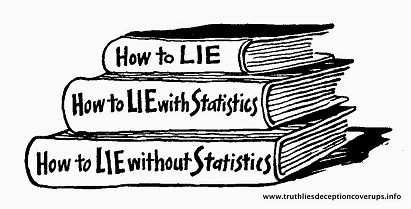
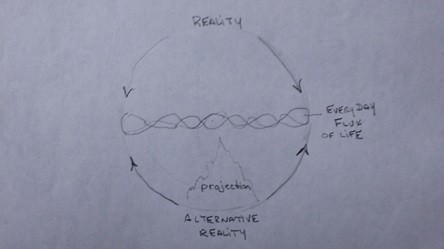
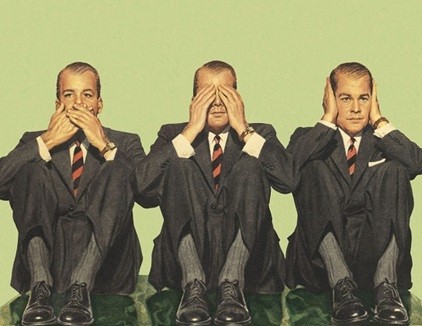
 probably talk more often about how a business loses its ability to accept, well, reality, as in its own business and its place in the marketplace, because if it can’t accept reality, it can’t confront reality. What I mean by this is reality slams a business in the face and yet they still ignore it. The prime example of this is when a business convinces itself that down is up. We’ve all sat in the conference room where somebody has shown a graph suggesting that the entire industry is down and yet our business is up compared to everybody else. Reality is the business is down and yet we are convincing ourselves we are up. But what I’m going to talk about today is how business consistently ignores reality to its detriment. It ignores the future, it ignores its flaws, it ignores its vulnerabilities, and simply adopts initiative after initiative, embraces best practice after best practice, sets goal after goal, and pursues more revenue and more growth suggesting that is the only reality that matters. It fools itself into believing that they are responding to the needs of the time because they are creating numbers that suggest the market sees them as meeting the needs. And, yet, the initiatives are tied to some numbers. Uh oh. Numbers and objectives far too often do not reflect reality. And therein lies how most businesses lose their ability to confront reality.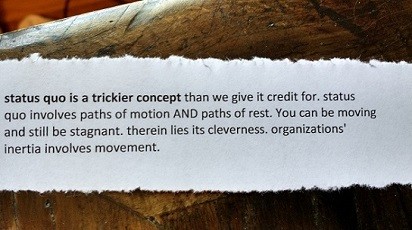
 Which leads me to the superficial surface of human instincts.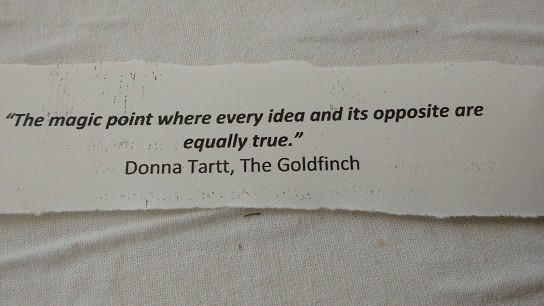

 Which leads me back to unfolding.
 ==
== But here is the truth about a crisis. Crises do not render the structures created by time obsolete. In fact, time and historical gravity creates an extremely solid structure built upon deep, embedded, memory (and comfort). A crisis, or the perception of a crisis, may cloak this truth, but structures are structures and

 Despite the feeling many things seem ‘stuck’ all around us, we are in a constant state of transformation. It is the normal byproduct of nonstop information flow which used to be considered revolutionary, but is simply ubiquitous to constant learning and new information. Simplistically, information changes the conditions of what is: how we see things, how we think about things, how we do things. Boundaries exist; and yet they don’t. Boundaries, in life, are, well, mischievous and because they are mischievous, they are in constant conflict between stasis and change. What it means is nothing has meaning in and of itself – alone -, but rather finds its meaning through the sometimes abrasive changing things rubbing against it. Unfortunately for many of us, this means simplistic labels or heuristics (which we like) don’t offer us truth.
 will tend to lose effectiveness at one continuous speed. Yeah. Even strategies have to be a bit mischievous.

 Since then, well, businesses have been inching their way into all of these. That said. I would be remiss if I didn’t point out I could write an entire piece on all 6 of these things on how badly business had been at implementing let alone embracing each of these 6 things.

 Everyone is different and I imagine while we all feel a sense of anxiety at times, we all manage it a bit differently because, well, everyone is different. Sometimes that difference is discernible to the naked eye and sometimes not. And therein lies the beginning of holes and anxiety. Unfortunately, sometimes being different seems to put you in some hole where you appear to live where no one else lives. Oddly enough if you can get out of the hole you would simply see that almost everyone has their own hole that Life makes you climb in and out of on occasion. That said. Anxiety is a bit different. The anxiety hole is extremely personal and not really comparable to other peoples’. While other mental disorders kind of squeeze you, anxiety simultaneously rips you apart and squeezes you. That double whammy makes it almost like a game of mental whack-a-mole. And that is where anxiety intersects with all other mental holes – inevitably Life puts you in your hole and leaves you there … alone … with your thoughts. There is no wondering about how you are different than other people or why other people can see the world differently than you; it is just you against the world. Uhm. And Life doesn’t help you get out of the hole. Because it is yours. And it is yours to figure out how to get out of.
 The anxiety hole is about emptiness. A lack of … well … anything to hold on to and sometimes it is a lack of anything discernible. It is just a dark swirling hole of anxiety and angst.
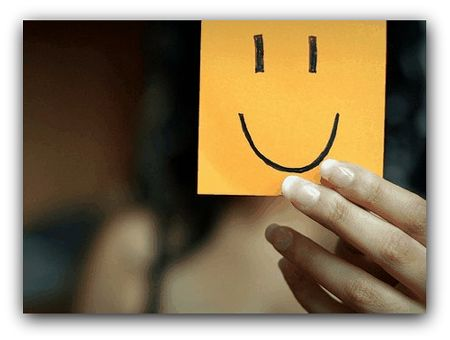 Joy in life. While Marx was speaking of industry, the same is true of life and, yes, joy. Moments are the elements of what one will find profitable in life – learning, experiences, connections, and joy. That said. I read somewhere that pleasure is always derived from something outside you, whereas joy arises from within (extrinsic versus intrinsic). Therefore, in seeking a substitute for joy, the mind will seek salvation or fulfillment through some external stimulation. Therein lies the root of people seeking to define themselves through disasters. It is a warped way to find pleasure, and it certainly does not make joy. Here is the good news. We can save them if you understand the joy and pleasure equation and its relationship with time and space.


 Evaluating in full the costs and benefits of even a fraction of the options would take far too long to be practical. This choice scenario may seem extreme, but in reality it is not too far from the amount of information we must analyze in everyday life. We live in an extraordinarily complicated environment. It would be impossible to recognize and evaluate all the aspects of each person, event, situation and product we encounter in one day. We do not have the capacity for it, let alone the time and motivation. As a result, we have developed mechanisms to deal with this complexity <and scenarios like the supermarket>.

