

—-
73% of teens have access to a smart phone

==
PewResearch 2015
—————
Ok.
 It always drives me a little nuts when good research is used in media or discussions to make some generalization, or stereotypical, point without regard for the entire research.
There was this headline the other day … “73% of teens have smartphones” … which then makes every older person , who is most likely reading the online newspapers it appears in, start bitching & moaning about technology and young people and ‘why the hell do young people have such expensive technology!”
In other words … Armageddon is upon us in the form of our younger generation!
Just to state the obvious.
Yes.
If it seems like every teenager you see has a smartphone glued to them … that is truth. The Pew study result is actually lower than many other studies which have it closer to 80%.
And then if you add in the 15% of teens who have a basic cell phone you pretty much have about 90% of young people have some mobile, hand held, technology.
Yes.
If it seems like every young person is using mobile phones or some hand held technology as access to social media … and this translates into a major part of teens’ lives today … that is truth.
— note: —
Because this post has a futurist spin to it i would like to point out that i stated in May 2014 I believed over 80% of children would have cell phones:
Uhm.
Oops.
Some more truth?
What they forget to tell you is that about 70% of 25-54 year olds have a smartphone … and add in the traditional cell phone and … yikes … over 90% of adults have some hand held technology.

<insert a big fat DOH! here>
Armageddon is upon all of us!
Oh.
One odd factoid from the research <okay … maybe counterintuitive factoid> … flip phones still have some usage with adults.
While the flip phone group as a whole tends to be lower-income families, one interesting anomaly was the high percentage of teens whose parents graduated from college who have only basic cell phones.
==
“We would expect to see fewer teens with highly-educated parents with just a basic phone, but we don’t.
It does suggest a choice rather than economics at play for that group.
Almost all of these teens have access to a computer at home, so their families may see a smartphone as more a lifestyle choice than a need.”
–
PewResearch
==
Look.
In other research young people have been asked about smartphones and how they feel about them.
And despite what old folk believe … young people are not only aware of but get the tug of war aspects of having such powerful technology in their hands.
In one high school study 60% admitted it created a lot of wasted time … and at the same time … in the same study … 80% suggested it made life easier.
Whoops.
Isn’t that exactly what older folk think?
We all know that having technology in our hands can be an addictive waste of time … but we also recognize it empowers and enables us to do shit even easier & faster than we have ever been able to do it before.
Now.
Even as I write about smartphones , or handheld technology, enabling a better version … or maybe just a new version … of how we live our lives my inbox is  being overflowed with gobs of futurists pontificating on the inevitable demise of smartphones as ‘wearable technology’ rears its innovative head as the ‘new cool thing that will take over the world.’
Well.
Not so fast my friends.
To be clear.
I admit I am no futurist nor do I have some magic crystal ball … and, frankly, innovation leaps are almost as easy to predict as the stock market <no one really can nor is anyone actually any good at doing so>.
Even really smart people get it wrong.
====
Back in 1975, while most desks were still furnished with manual typewriters, technology pundits were making their predictions on the future of computers in the workplace.

Computers showed tremendous potential for word processing and automation, they said, but would they really ever be user-friendly enough for general use?
Despite ominous forecasts from typewriter executives, we all know how this story ends.
And a slew of other innovations have followed: the Internet, email, smartphones, Wi-Fi, GPS, and many more.
====
And now the ‘new thing’ is wearable technology.
Wrist watches, wristbands, microchip tattoos, computerized clothes – these technologies will turn your body into a mobile computer with wi-fi access. <I believe this is also known as “PAN” – Personal Area Network>.
This one guy, Sephi Shapira, is really going out on a limb and is suggesting that “the smartphone is a goner.” While I don’t agree let me share his side of the story first:
====
It’s hard to believe this prediction by Sephi Shapira, CEO of the performance mobile advertising company MassiveImpact.
But what if he’s right?
What’s the point of a smartphone?
What do smartphone users really value?
The “smart” bit, for connectivity and multiple functions?
Or the “phone” bit, for simple voice communication?
According to a 2012 Médiamétrie study in France, smartphones are primarily valued for personal organization (83%) and connectivity (75%). Communication is only essential to 65% of users – almost the same as entertainment, at 64%. 50% of users can’t do without email or camera functions, and 35% have to have GPS.
In other words, the phone function is not essential, so any device that meets these varied needs and is more ergonomic should be able to topple the descendants of the 1980’s carphone.
The phone function is not essential.
Under threat from new high tech innovation, the trend for “wearables” – smart devices that are worn rather than carried – is booming.
Worn on or close to the body, smart glasses, smart watches and the like are becoming ever more advanced and capable of new functions. They are more practical and immersive, and are now easy to use, thanks to advances in voice recognition technology. At the same time, smartphones are getting increasingly expensive: the new iPhone 5S costs the same as a quality computer.
So does this signal the end of smartphone dominance?
According to market intelligence firm IDC, in countries with mature markets, the growth in smartphone sales could drop from 20.6% in 2012 to 4.6% in 2017. The great wheel of innovation never stops turning though: perhaps soon a 4G phone will be seen as outdated.
And Sephi Shapira may be hailed as a great prophet.
===
By the way … just because a market is ‘maturing’ doesn’t mean that it is dying. A market can simply mature via saturation and then beget innovations within the mature market … not ‘without’ it.

Regardless.
Yeah.
I buy the fact that the ‘phone’ ain’t what matters to people anymore but rather the portable technology aspect.
But before I leave the phone aspect I would like to suggest that verbal communication, even phoning, will not die. Or of it does it will be generations from now. People still use their smartphones for phoning but the relationship has been flipped.
Where you once called first and emailed or texted second as a follow-up … you now text first … schedule the call <check availability> and call. The portable technology enables less wasted time and more efficient calling … but people still talk.
Regardless.
The phone aspect has certainly been demoted.
Online is already a status quo … no longer a ‘status.’ Mind you … that is an incredibly big distinction.
What used to simply be ‘cool’ is now a mainstay of ‘life survival’ in terms of living life the way it is today.
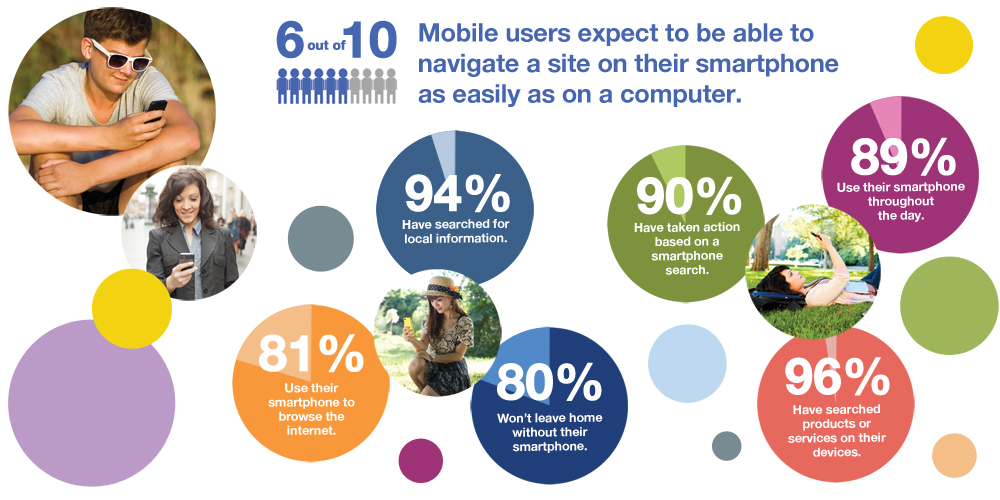
Being offline today is kind of like using horses for transportation.
But I truly believe the smartphone or even tablet will not come to an end <in the foreseeable future>. The core concept of smartphones is “a communications/interactive device.” Ok. Maybe that’s not really true. Maybe a smartphone is already not a phone but rather a mobile computer.
The mobile computer device of the future will most likely change to accommodate technologies like VOIP which suggests no need for a voice carrier … but their place in our lives will not change in the foreseeable future.
I admit.
I hope I am not one of those people who refuse to see the changes that come ahead or balk at the changes that will demand us to adjust.
But I also take solace in the fact that even if the end is near for smartphones good ole capitalism will kick in and business will milk smartphones for every cent before they willing shift to some other technology.
Regardless.

Putting my futurist hat on <it is a funny looking chapeau>.
I do see implanted and maybe even bioengineered stream of consciousness information access/control interface down the road.
If not only for the reason that many people, a majority, would like to eliminate some stuff in their lives and if it created efficiencies & convenience & easier & ‘better things in everyday life’ … well … its gonna happen.
Of course the big issue is going to be privacy but even with all the kicking & screaming about invasion of privacy today I see younger people more & more willing to give up some privacy for better service & gratification.

Anyway.
End of smartphones? Geez. I just don’t see it yet.
That said.
I do not doubt for one second that wearable technology will certainly have a role in the future.
I also do not doubt that the future is coming <whether we want it to or not> and it will be more high tech than ever before.